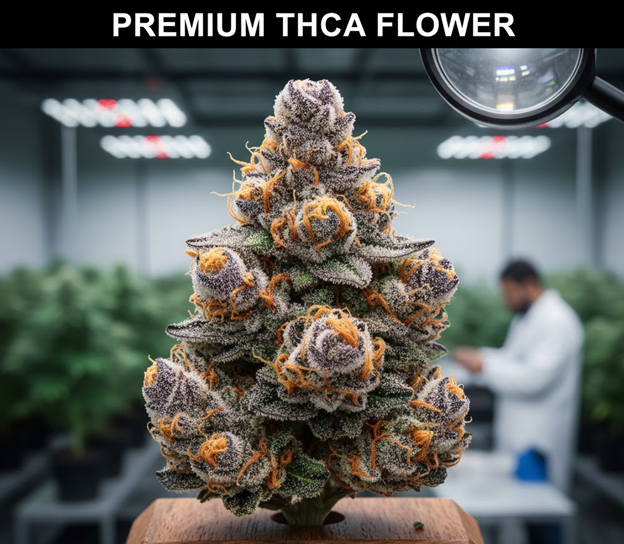
As the calendar turns to 2026, the distinction between “budget” hemp and Bulk THCA Flower has never been clearer. In a market where transparency and lab-verified purity are now mandatory, “premium” has evolved into a technical standard rather than a marketing buzzword. For the modern enthusiast, sourcing premium flower means looking beyond simple potency percentages and into the craftsmanship of cultivation, curing, and genetic stability.
What Defines “Premium” in the 2026 THCA Market?
In the current landscape, premium THCA flower is defined by a holistic approach to the plant. It isn’t just about the “high”; it’s about the sensory experience, the cleanliness of the grow, and the preservation of the plant’s volatile compounds.
1. Indoor Cultivation and Environmental Precision
The majority of top-tier THCA flower in 2026 is produced in climate-controlled indoor facilities. Unlike outdoor or greenhouse grows, indoor environments allow master growers to manipulate variables such as light spectrum (using advanced LED arrays), CO2 levels, and root-zone temperature. This precision results in:
- Maximized Trichome Density: Buds appear “sugar-coated” with intact, milky-to-amber resin glands.
- Uniformity: Consistent bud structure and potency across different harvests.
- Pest and Contaminant Control: Eliminating the need for harsh pesticides, ensuring a “clean” smoke.
2. Genetic Stability and Rare Phenotypes
Premium status is often reserved for “exotic” genetics—strains that have been stabilized over multiple generations to express unique traits. In 2026, consumers are moving away from generic names and toward specific phenotypes bred for high terpene counts and rare cannabinoid ratios. Whether it is a gassy, fuel-heavy OG or a creamy, dessert-inspired hybrid, the genetics of premium THCA flower are unmistakably “loud.”
The Science of the “Total THC” Calculation
One of the biggest hurdles for premium growers in 2026 is maintaining federal compliance while pushing the limits of potency. The industry now strictly adheres to the “Total THC” formula to ensure the flower qualifies as legal hemp:
To maintain a Total THC level under 0.3% in certain restrictive jurisdictions, or simply to keep Delta-9 under the 0.3% federal cap, premium cultivators use “cold-cure” techniques. This prevents the natural degradation of THCA into Delta-9 THC, effectively “freezing” the plant in its most potent and legal state.
Identifying Quality: Curing and Lab Verification
The final hallmark of premium THCA flower is what happens after the harvest.
The Art of the Slow Cure
While industrial-scale hemp is often flash-dried, premium flower undergoes a slow, multi-week curing process in temperature-regulated glass or stainless steel vessels. This allows chlorophyll to break down—removing the “grassy” taste—and allows the terpene profile to reach its full complexity. The result is a smooth, flavorful vapor or smoke that lacks the harshness of lower-grade flower.
Laboratory Standards
In 2026, a simple potency test is insufficient. A premium product must be accompanied by a full-panel Certificate of Analysis (COA). This documentation must be as rigorous as the safety data for a research grade peptide, screening for:
- Full Terpene Profile: Identifying exactly which oils provide the aroma.
- Heavy Metal Screening: Ensuring the soil or medium was pure.
- Microbial Purity: Confirming the absence of mold, yeast, or salmonella.
Conclusion
Sourcing premium THCA flower in 2026 is an exercise in discerning quality through data and sensory experience. By prioritizing indoor-grown cultivars, demanding full-panel lab results, and looking for signs of a proper slow cure, consumers can enjoy the pinnacle of what the hemp plant has to offer. As the market continues to sophisticated, these premium standards will remain the benchmark for safety, legality, and enjoyment.

